If your limited company is solvent and has no debts, you have a choice in how you can close it down.
You first option is to apply to strike it off the register at Companies House. This is done by submitting form DS01 and notifying the relevant parties. This is also known as 'dissolving' a limited company.
Your second option is to utilise a formal liquidation procedure which is an official process undertaken by a licensed insolvency practitioner (IP). The cost of liquidating is considerably more than strike off, but there can be serious ramifications if you try to strike off your company and don’t meet the stringent requirements.
While some may assume this choice between liquidation and strike off is also open to insolvent companies, this is not strictly true. Strike off should not be used to close down a company which has outstanding creditors. For those companies which are insolvent, liquidation should be the route which is taken.
So looking at voluntary strike off first, what are the eligibility criteria you need to meet to ensure this process is right for your company?
Stop Creditor Pressure
Liquidation Portal For Company Directors
decorative line
Reduce Stress - Lose Creditor Pressure
Clear & Simple Visual Dashboard - Track your Progress
Limited company strike off – sometimes known as dissolving a limited company – is an informal way of closing down a limited company which is no longer required. This could be because the company has ceased trading, the director is approaching retirement, or simply because the directors have no desire to continue running the business.
A company director can voluntarily request that their company is struck off the register by submitting a DS01 form to Companies House online and paying the appropriate fee. A copy of the DS01 form must also be sent to any party who could be affected by the company's dissolution such as members (shareholders), creditors, employees, and any directors who did not sign the DS01. This must be done within 7 days of you submitting the DS01 form to Companies House.
Following your submission of the DS01 form, a notice will be placed in the Gazette declaring your intention to strike off the company, and following a period of two months – supposing no objections have been received – the company’s name will be removed from the register held at Companies House and it will cease to exist as a legal entity.
This is a relatively quick and inexpensive process, however, strike off is only suitable for certain companies in a particular set of circumstances. Strike off is designed as a simple and informal way for a company with no outstanding debt, legal proceedings, or substantial assets to close down in an efficient manner.
Is strike off appropriate for my company?
There are specific requirements that you need to meet before you can strike your company off the register at Companies House. These are:
Ceasing trade and other business activities for three months prior to strike off, apart from those required to wind up the company
Not changing the company name during the three months leading up to strike off
Being solvent, with no threat of liquidation present
Concerned about National Living Wage and NI increases?
With the rates of both National Living Wage and employer National Insurance Contributions increasing in recent years, this additional cost of employing staff has added more pressure onto already squeezed cash flows. If you are worried about the impact this is having on your company's finances, talk to the experts at UK Liquidators. As licensed insolvency practitioners we can explain your options and help you plot a way forward. Call today on 0808 253 9878.
What happens if your strike off request is objected to or challenged?
While some strike off applications go through unchallenged, in some cases, an objection will be raised which will halt further action being taken and prevent the company from being dissolved.
If you have voluntarily submitted a strike off application to have your company dissolved and have been met with an objection, the first step is to determine the reason why.
In the vast majority of cases, this will because the company is actually insolvent and a creditor of the company has been informed of your intention to dissolve the business and has formally raised an objection to Companies House to prevent this happening.
If you attempt to dissolve your company while having unpaid debts, it is highly likely you will encounter objections to the proposed strike off. This is because once a company has been dissolved, it ceases to exist as a legal entity, and creditors therefore stand to lose any money owed by the company should the strike off application go through. Due to this, it is in the creditors interest to object to the planned strike off in order to ensure the company remains active until the money it owes has been repaid.
If you are unable to settle the debts of the company prior to strike off, you will need to consider closing the company through a formal insolvent liquidation process such as a Creditors' Voluntary Liquidation (CVL).
Disadvantages of strike off
Creditors can oppose a strike off – HMRC are known to quickly oppose such a move if you have tax debts, and will then attempt to force your business into compulsory liquidation.
Directors must ensure all creditors are informed - the company can be reinstated after it being struck off if a creditor subsequently makes a claim.
Alternatives to strike off: Company Liquidation
If your company is in debt, or conversely, is solvent and has a significant amount of money or assets, strike off is not likely to be appropriate for your situation.
In cases of insolvency, and instances where a company has considerable assets, liquidation is likely to be the preferred route. Liquidation is similar to strike off in that it ultimately brings an end to a business which is no longer needed. There are two main types of liquidation and the one which is right for your company will depend on its financial position at the time of liquidation
Solvent Liquidation via Members' Voluntary Liquidation (MVL)
A Members’ Voluntary Liquidation (MVL) is a formal procedure whereby the company is wound up by a licensed insolvency practitioner. The company must be solvent to be eligible for an MVL, and you sign a formal Declaration of Solvency attesting to this fact.
A licensed insolvency practitioner is appointed to carry out the procedure and make the final distributions to shareholders.
Insolvent liquidation via Creditors' Voluntary Liquidation (CVL)
If your company is insolvent, voluntary liquidation by way of a Creditors’ Voluntary Liquidation (CVL) could be the most appropriate option. A CVL is initiated by the company's directors once they realise that their company is insolvent and its problems have taken it beyond the point of rescue. A CVL brings about the end of an insolvent company in an orderly manner, while ensuring all creditors are dealt with fairly and in accordance with the Insolvency Act 1986.
A CVL must be overseen by a licensed insolvency practitioner who will handle the entire process on behalf of the company’s directors. As part of their role, the appointed insolvency practitioner will be responsible for identifying company assets, dealing with outstanding creditors, and ensuring any distributions are made according to a set hierarchy of priority.
Once this has been done the company will be formally dissolved at Companies House and will no longer exist as a legal entity. Any remaining debt will be written off unless this has been personally guaranteed by directors.
Strike off or liquidation?
To answer the question, “Should I strike off or liquidate my company?” you need to consider what would happen to existing debts. If you can’t repay them and try to strike off the company, the application would be challenged. Furthermore, if a creditor files a claim for a debt in the future, the company can be reinstated by the courts.
When you liquidate a company, if it’s insolvent, any unpaid debts that remain are officially written off so there’s no chance of being held personally liable for them in the future. The business is closed down in an orderly manner when you opt for solvent or insolvent liquidation, and you gain the support of a licensed professional.
Start your online liquidation today
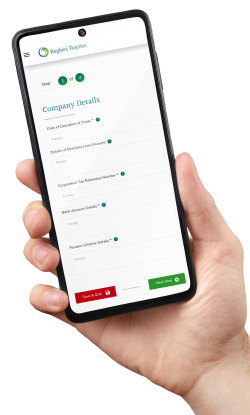
If you have decided liquidation is the right option for your limited company, you can take the first step and begin the process online using our online portal. Starting the process is quick, simple, and can be done at a time that suits you. Your information will be submitted to your local UK Liquidators insolvency practitioner who will be with you every step of the way. Click here to start your company’s liquidation online.
Our expert team at UK Liquidators has more than 25 years’ experience of helping directors voluntarily liquidate their companies. We can provide more detail on director redundancy and your potential eligibility, and guide you on the best way to close your company. We operate a wide network of offices around the country – please contact one of the team to arrange a free same-day consultation.
Jonathan Munnery
Insolvency & Restructuring Expert | 20+ Years Insolvency Experience
Jonathan is a Partner at Real Business Rescue and member of both the Insolvency Practitioners Association (MIPA) and The Association of Business Recovery Professionals (MABRP). Jonathan has over 20 years’ experience guiding directors through CVL and MVL processes, helping them understand their options and navigate financial distress with clarity and compassion.
IPA Member MABRP Member IPA Regulated
“ Directors often wait too long before seeking advice. The earlier you call, the more options remain available to you — and the better the outcome for everyone involved. ”
Jonathan is a Partner at Real Business Rescue and member of both the Insolvency Practitioners Association (MIPA) and The Association of Business Recovery Professionals (MABRP). Jonathan has over 20 years’ experience guiding directors through CVL and MVL processes, helping them understand their options and navigate financial distress with clarity and compassion.
This site uses cookies to monitor site performance and provide a more responsive and personalised experience. You must agree to our use of certain cookies. For more information on how we use and manage cookies please read our PRIVACY POLICY