If your company took out a Bounce Back Loan (BBL) during the Covid-19 pandemic and you are now struggling to repay it, you are not alone. Tens of thousands of directors across the UK are in the same position. The good news is that in most cases, you are not personally liable for a Bounce Back Loan as it is a company debt, not a personal one. The options available to you depend on your company's wider financial position and what you want to happen next.
This article sets out the realistic options available, what happens to a Bounce Back Loan if your company closes or goes into liquidation, what personal liability risks exist, and what to do if you have already received a demand letter from your bank.
Bounce Back Loan repayment — at a glance
Question
Answer
Am I personally liable for the BBL?
Generally no. Bounce Back Loans are unsecured company debts with no personal guarantee required
What if my company can't repay?
Several options exist including refinancing, CVL, or other insolvency routes
What happens to the BBL in a CVL?
It is treated as an unsecured creditor debt and written off if assets are insufficient
Can the BBL be written off?
Yes, in liquidation unpaid Bounce Back Loan debt is written off along with other unsecured debts
What is BBL misuse?
Using the loan for purposes other than the economic benefit of the business can result in personal liability
I've had a demand letter from my bank
Take professional advice immediately as several options may still be open to you
Concerned about National Living Wage and NI increases?
With the rates of both National Living Wage and employer National Insurance Contributions increasing in recent years, this additional cost of employing staff has added more pressure onto already squeezed cash flows. If you are worried about the impact this is having on your company's finances, talk to the experts at UK Liquidators. As licensed insolvency practitioners we can explain your options and help you plot a way forward. Call today on 0808 253 9878.
Am I personally liable for a Bounce Back Loan I cannot repay?
This is the question directors ask most urgently, and the answer, in most cases, is no, you are not personally liable for a Bounce Back Loan balance you can not afford to repay.
Bounce Back Loans were issued to limited companies under a government-backed guarantee scheme. Crucially, unlike many forms of business borrowing, directors were not required to provide a personal guarantee as a condition of the loan. This means that if your company cannot repay the BBL and subsequently goes into liquidation, the debt is owed by the company, not by you personally.
The bank's recourse is to the company's assets, and if those are insufficient to repay the loan, the government guarantee covers the lender's loss. The bank cannot pursue you personally for the outstanding balance simply because the company cannot pay.
However, there are circumstances where personal liability can arise. These are discussed in the misuse section below and include situations where the loan was not used for the economic benefit of the business, or where a director took the loan knowing the company was already insolvent. If either of these applies to your situation, you should seek professional advice promptly.
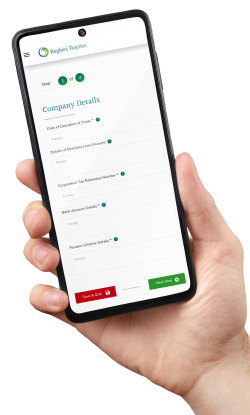
Stop Creditor Pressure
Liquidation Portal For Company Directors
decorative line
Reduce Stress - Lose Creditor Pressure
Clear & Simple Visual Dashboard - Track your Progress
What are my options if I cannot afford to repay my Bounce Back Loan?
The right option depends on whether your company is still viable or whether closure is the most realistic outcome. Here are the main routes available.
Pay As You Grow (PAYG)
If your company is still trading but struggling with BBL repayments, the government's Pay As You Grow scheme allows you to request more flexible repayment terms from your lender. Options include reducing your monthly repayment to half for up to six months, pausing repayments entirely for up to six months (interest still accrues), or extending the loan term from six years to ten years. You can use these options more than once, in any order.
Pay As You Grow is only available while your company is still trading and in good standing with the lender. If your company is already insolvent or you have missed payments, this route may no longer be accessible. Contact your lender directly in the first instance.
Creditors' Voluntary Liquidation (CVL)
If your company is insolvent and cannot realistically trade its way to recovery, a Creditors' Voluntary Liquidation (CVL) allows you to close the company in an orderly, legally compliant way. In a CVL, the Bounce Back Loan is treated as an unsecured creditor debt. If the company's assets are insufficient to repay it in full, which is the case in the vast majority of BBL situations, the outstanding balance is written off as part of the liquidation process.
Directors do not need to repay the Bounce Back Loan from their own personal funds in a CVL, provided the loan was taken out and used correctly. The bank's loss is covered by the government guarantee. This is why a CVL is the most common resolution for companies with unrepayable Bounce Back Loans.
Company Administration
If the underlying business is viable but the company needs breathing space to restructure, Company Administration may be an option. Administration triggers an automatic moratorium that pauses creditor action, including BBL repayment demands, while the administrator works to rescue the business or achieve a better outcome for creditors than immediate liquidation. This is a more complex and typically more expensive route and is most appropriate where there is a realistic prospect of the business continuing in some form.
Informal negotiation with the lender
In some cases, it may be possible to negotiate an informal arrangement directly with your lender, agreeing a reduced repayment schedule or a temporary payment holiday outside of the formal Pay As You Grow scheme. Lenders have varying appetites for this approach, and there is no obligation on them to agree. However, if your company is otherwise viable and the BBL repayment is the primary pressure point, it is worth exploring before pursuing a formal insolvency route.
Start your online liquidation today
If you have decided liquidation is the right option for your limited company, you can take the first step and begin the process online using our online portal. Starting the process is quick, simple, and can be done at a time that suits you. Your information will be submitted to your local UK Liquidators insolvency practitioner who will be with you every step of the way. Click here to start your company’s liquidation online.
I have received a demand letter from my bank — what should I do?
Receiving a formal demand letter from your lender regarding an unpaid Bounce Back Loan can feel alarming. It is important to understand what it means and to act promptly, but it does not necessarily mean your options have run out.
A demand letter is the lender formally calling in the outstanding balance of the loan. This is typically the step before the lender escalates to more formal enforcement action or refers the matter to the government's guarantee scheme. At this stage, the following steps are important:
• Do not ignore the letter — failing to respond will limit your options and may accelerate the lender's next steps.
• Take professional advice immediately — a licensed insolvency practitioner can assess your company's full financial position and advise on the options still available to you.
• Do not make preferential payments — if your company is insolvent, paying the BBL ahead of other creditors could be challenged later as a preference under insolvency law.
• Consider whether a CVL is the right route — if the company is insolvent and closure is inevitable, acting voluntarily before the situation escalates gives you more control over the process and outcome.
The key message is that receiving a demand letter is not the end of the road. Directors who engage promptly and take professional advice at this stage typically have more options available to them than those who wait who may find themselves forced into compulsory liquidation.
What happens to a Bounce Back Loan if my company goes into liquidation?
In practice, this means that in the vast majority of liquidations involving a Bounce Back Loan, the bank receives little or nothing from the company's assets. The government guarantee then covers the lender's loss up to 100% of the outstanding balance. The liquidator does not pursue the director personally for the shortfall, provided the loan was taken out and used in accordance with the scheme's terms.
Once the liquidation is complete and the company is dissolved, the outstanding BBL balance is written off. The director is not left with a personal debt. This is one of the most important things to understand, and one of the reasons a CVL is often the most straightforward resolution for companies that cannot repay their Bounce Back Loan.
What is deemed misuse of a Bounce Back Loan?
Bounce Back Loans were issued on the basis that the funds would be used for the economic benefit of the business. Misuse occurs when the loan was used for purposes outside this definition and it is an area the government, lenders, and the Insolvency Service have all taken seriously.
Examples of conduct that may be considered misuse include:
Withdrawing the loan funds as personal drawings or director's salary rather than using them for genuine business purposes
Transferring loan funds to a connected individual or company without a legitimate business reason
Taking out a BBL when the company was already insolvent and had no realistic prospect of trading, effectively with no intention to repay
Obtaining a BBL by misrepresenting the company's turnover to secure a larger loan than the company was entitled to
If misuse is identified during a liquidation, the consequences can be serious. The liquidator is required to report their findings to the Insolvency Service, which can investigate director conduct and, in cases of deliberate misuse or fraud, pursue personal liability, director disqualification, or in the most serious cases, criminal prosecution.
If you are concerned that the way your BBL was used might raise questions, it is essential to take professional advice before the liquidation begins. Being open with your insolvency practitioner from the outset is always the better approach as they can help you understand your exposure and how to present your position accurately.
Can a Bounce Back Loan be written off?
A Bounce Back Loan can be written off but only in the context of a formal insolvency process such as a CVL or compulsory liquidation, and only where the loan was taken out and used correctly.
Outside of a formal insolvency process, a Bounce Back Loan cannot simply be written off or forgiven. There is no government scheme for individual companies to apply for BBL write-offs. If your company is still trading and cannot repay the loan, the options are to use Pay As You Grow to manage repayments, negotiate directly with the lender, or pursue a formal insolvency route.
It is also worth being clear on what 'written off' means in the context of liquidation. When a company is liquidated and the BBL cannot be repaid from assets, the remaining debt is written off for the company, meaning the company's obligation ends on dissolution. The lender recovers its loss from the government guarantee. This is not a write-off that benefits the director personally, it simply means the company's liability ends when the company ceases to exist.
How UK Liquidators can help
We deal with Bounce Back Loan situations as a routine part of our work, helping directors understand their position, exploring every available option, and where liquidation is the right route, managing the process efficiently and with the minimum of personal stress.
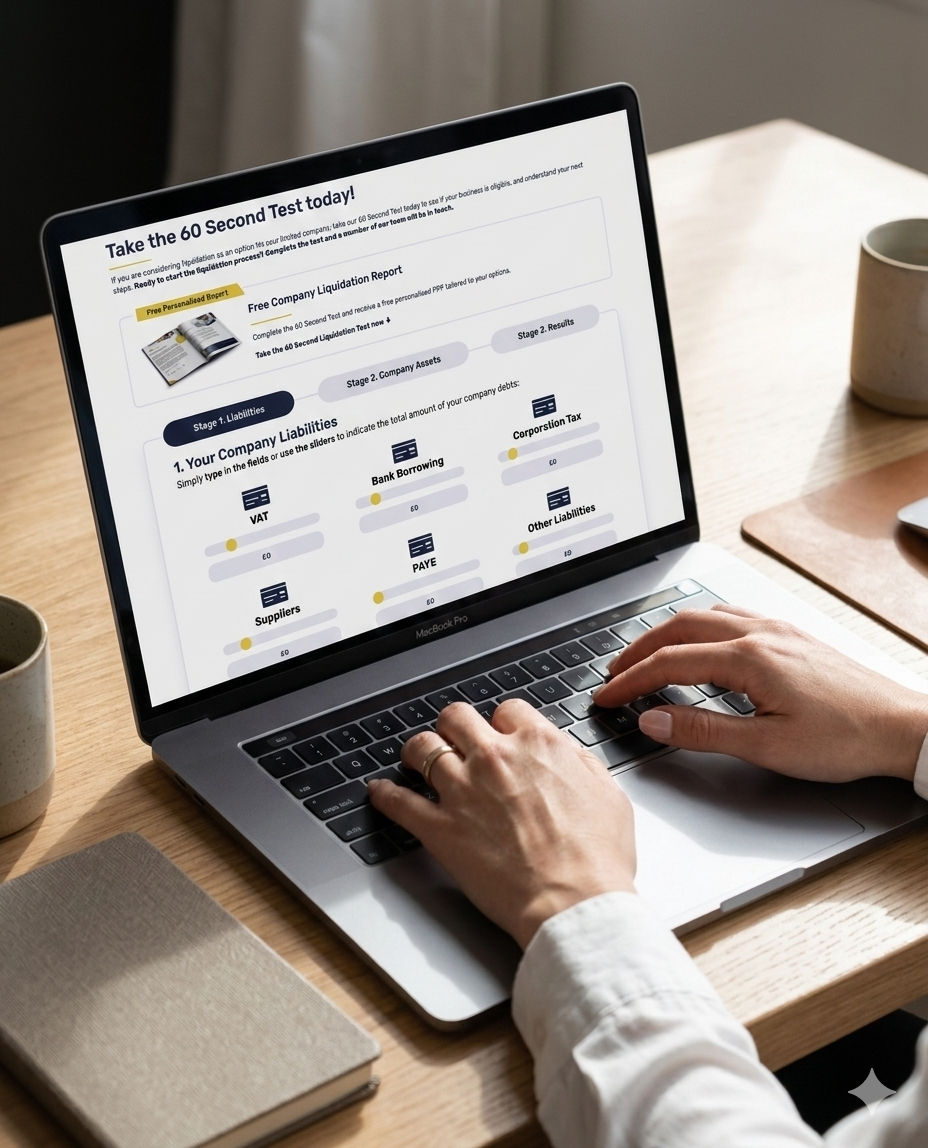
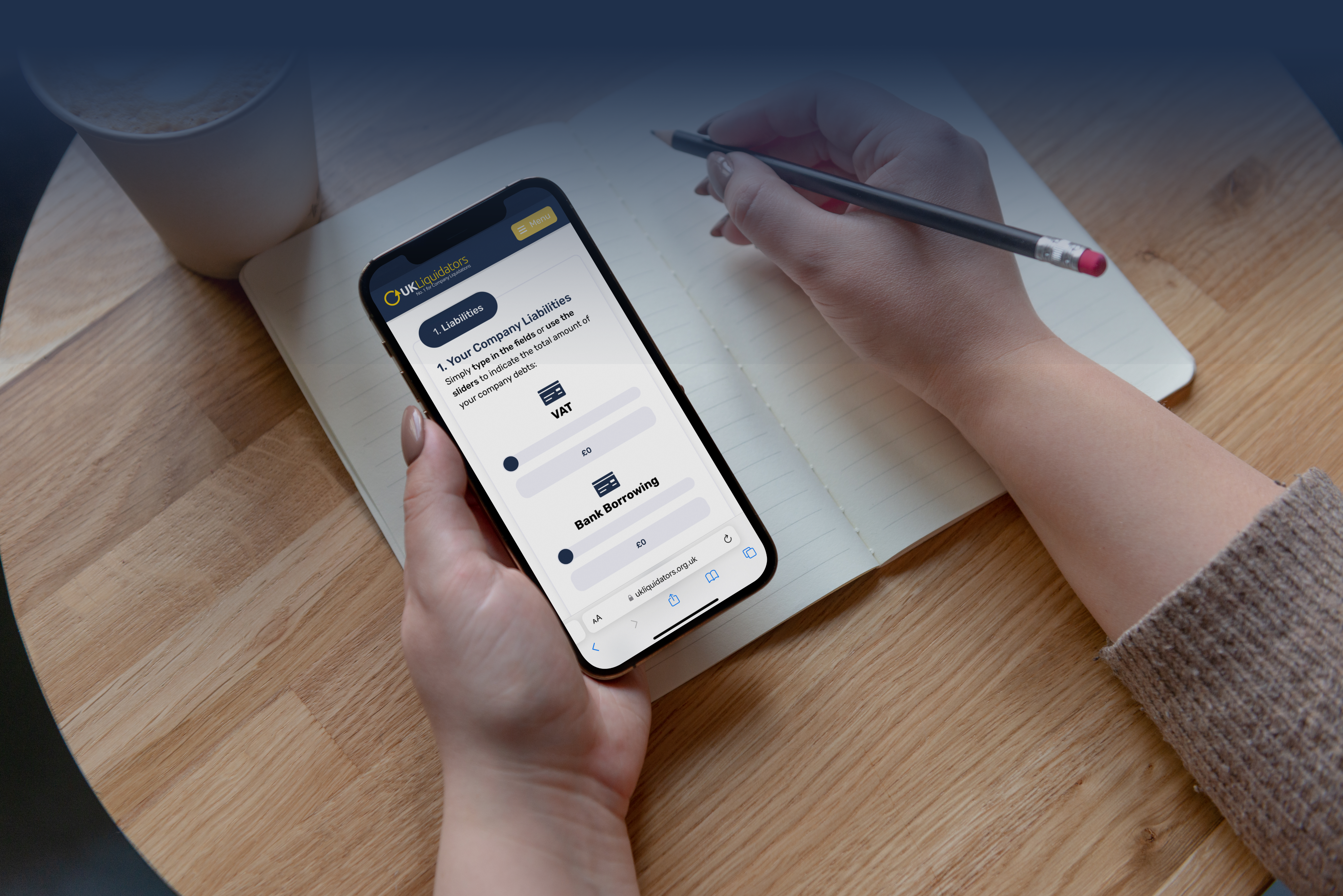
All insolvency practitioners at UK Liquidators are fully licensed and regulated. We offer a free initial consultation with no obligation, operating from 100+ UK offices across the UK, and treat every conversation as strictly confidential. Whether you have just received a demand letter or have been weighing up your options for some time, the right time to speak to us is now. Call our team or take our 60 second test to get started.
Frequently asked questions
Will a Bounce Back Loan affect my personal credit rating?
In most cases, no. Because the BBL was taken out by your limited company, not by you personally, and no personal guarantee was required, the loan does not appear on your personal credit file. If your company enters liquidation and the BBL is written off, this is a company matter and does not directly impact your personal credit score. The exception would be if you have any personal debts connected to the company, such as a personally guaranteed overdraft or a director's loan that the liquidator pursues through the courts.
Can I start a new company after liquidating a company with an unpaid Bounce Back Loan?
In most cases you will be able to start a new company. Liquidating a company with an unpaid BBL does not automatically prevent you from starting a new business, provided the loan was taken out and used correctly and the liquidation process is handled properly. The Insolvency Service will investigate director conduct as part of the CVL, and if no misconduct is found, there is nothing to prevent you from becoming a director of a new company. If misconduct is identified — particularly around BBL misuse — director disqualification may be a consequence, which would restrict your ability to act as a director.
What happens if my company has both a Bounce Back Loan and other debts?
In a CVL, all of the company's debts are dealt with together. The BBL sits alongside other unsecured creditor debts in the order of distribution. Other debts, such as HMRC liabilities, trade creditors, and unsecured loans, are treated in exactly the same way. The liquidator realises the company's assets and distributes the proceeds to creditors in the prescribed order of priority. The BBL does not take precedence over other unsecured debts, and other unsecured creditors do not take precedence over the BBL.
My company is still trading — should I keep making BBL repayments?
If your company is solvent and the BBL is the only financial pressure, continuing to make repayments while exploring Pay As You Grow or other arrangements with your lender is generally the right approach. However, if your company is already insolvent, meaning it cannot pay its debts as they fall due, making BBL repayments while other creditors go unpaid could be challenged as a preference by a future liquidator. In this situation, you should take professional advice before making further payments, rather than prioritising one creditor over others.
What if I took out a Bounce Back Loan and have since dissolved the company?
Dissolving a company with an outstanding Bounce Back Loan without going through a formal insolvency process is not permitted, and attempting to do so can have serious consequences for directors. If the company is dissolved while the BBL remains outstanding, the Insolvency Service or the lender may apply to have the company restored to the register, and the director's conduct will be investigated. If you have already dissolved your company or are considering doing so, you should take professional advice immediately.
Jonathan Munnery
Partner | 20+ Years Insolvency Experience
Jonathan is a Partner at UK Liquidators and member of both the Insolvency Practitioners Association (MIPA) and The Association of Business Recovery Professionals (MABRP). Jonathan has over 20 years’ experience guiding directors through CVL and MVL processes, helping them understand their options and navigate financial distress with clarity and compassion.
IPA Member MABRP Member IPA Regulated
“ Directors often wait too long before seeking advice. The earlier you call, the more options remain available to you — and the better the outcome for everyone involved. ”
Jonathan is a Partner at UK Liquidators and member of both the Insolvency Practitioners Association (MIPA) and The Association of Business Recovery Professionals (MABRP). Jonathan has over 20 years’ experience guiding directors through CVL and MVL processes, helping them understand their options and navigate financial distress with clarity and compassion.
This site uses cookies to monitor site performance and provide a more responsive and personalised experience. You must agree to our use of certain cookies. For more information on how we use and manage cookies please read our PRIVACY POLICY