Could you save your company or close it in a more cost-effective way?
Liquidation is a process you can use to close down a solvent or insolvent limited company, but it’s not your only option. If your company is solvent, you may be able to close it in a more cost-effective way. And if it’s insolvent, there may be other routes you can take to potentially save your business.
What is Company Liquidation?
Company Liquidation is a formal process to close down a trading company. A licensed insolvency practitioner will take control of the business and act as the liquidator. They will bring an end to its affairs and realise its assets for the benefit of the company’s shareholders (solvent) or creditors (insolvent). The company will then be struck off the Companies House register and cease to exist as a legal entity.
Concerned about National Living Wage and NI increases?
With the rates of both National Living Wage and employer National Insurance Contributions increasing in recent years, this additional cost of employing staff has added more pressure onto already squeezed cash flows. If you are worried about the impact this is having on your company's finances, talk to the experts at UK Liquidators. As licensed insolvency practitioners we can explain your options and help you plot a way forward. Call today on 0808 253 9878.
What are the different types of liquidation?
Liquidation is not a one size fits all procedure. There are three types of Company Liquidation to close businesses in different positions.
You can use a Members’ Voluntary Liquidation (MVL) to close a company that is solvent and has significant assets to distribute in a tax-efficient way.
If your company has unmanageable debts and is no longer viable, you can shut it down voluntarily using a Creditors’ Voluntary Liquidation (CVL). In this case, the assets of the business will be sold and the proceeds will go towards repaying your creditors. The company will then be closed and any remaining debts will be written off.
Compulsory Liquidation is not a voluntary procedure. In this case, a company creditor, often HMRC, will issue a Winding Up Petition to close the company down. If you do not oppose the petition, the company can be forced into liquidation and wound up by the court. This type of liquidation is best avoided as it can lead to serious consequences for the directors personally.
What is the alternative to solvent liquidation?
Company strike-off
Company strike-off, also known as dissolution, is another method you can use to close your solvent business. The process itself is simple. As long as a majority of the directors agree with the strike-off, you can complete the process online or send paper form DS01 to Companies House and close your business for just £10.
Company strike-off is best suited to companies with assets worth less than £25,000. If your company has assets worth over £25,000, a Members’ Voluntary Liquidation will usually be more tax efficient as your profits will be subject to capital gains tax rather than income tax.
Stop Creditor Pressure
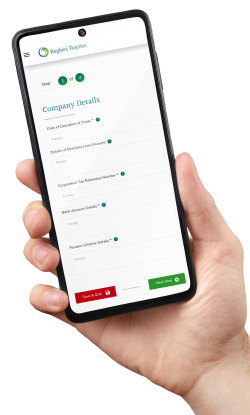
Liquidation Portal For Company Directors
decorative line
Reduce Stress - Lose Creditor Pressure
Clear & Simple Visual Dashboard - Track your Progress
Before applying for strike-off, you should sell or transfer the company’s assets. Any assets still under the business’s ownership after it has been struck off from the Companies House register will become the property of the Crown.
What are the alternatives to insolvent liquidation?
Company Voluntary Arrangement
If your business is struggling financially but you believe it’s still viable, a Company Voluntary Arrangement (CVA) could allow you to continue trading while repaying your debts over time.
A CVA is a formal insolvency procedure, so you’ll need help from a licensed insolvency practitioner to set it up. They will consider your business’s long-term viability and work with you to negotiate a repayment agreement with your creditors.
If your repayment proposal is accepted by 75% (by value) of your creditors, you’ll be able to repay your debts via a single monthly payment over a typical period of three to five years. Any debts remaining at the end of the CVA will be written off.
Administration
Company Administration is an insolvency procedure that may be able to keep you trading in some form. It’s best suited to businesses that can no longer pay their debts when they’re due and are facing relentless creditor pressure.
One of the benefits of Administration is that the initial application to the court triggers an eight-week moratorium, which has the effect of pausing all creditor legal action. That temporary protection gives the company breathing space so the administrator can consider plans to rescue, restructure or sell the business.
Administration usually lasts up to 12 months, although the amount of time it takes will depend on the complexity of the case and your exit route out of the process. Administration exit routes include:
Continue to trade
The administrator may be able to resolve the company’s financial issues by selling assets, raising additional funds or making an informal repayment agreement with your creditors. The administrator will then give control back to the directors so they can continue trading.
Company Voluntary Arrangement
If the company is struggling with its debts, the administrator could negotiate a CVA with the creditors. If the creditors approve, the company can exit Administration and continue trading without the threat of creditor pressure or legal action.
Pre-pack sale
In this process, some or all of the assets of the insolvent business can be sold to a new company, which is often set up by some or all of the directors of the insolvent business. It allows for a continuation of the business, with the new company trading under a new name and without the historic debts.
Creditors’ Voluntary Liquidation
If the company is no longer viable and the administrator cannot resolve its financial problems, the best course of action might be to close it down. In this case, they can sell the business’s assets during administration before entering a CVL to distribute the proceeds to the creditors and close the business.
Start your online liquidation today
If you have decided liquidation is the right option for your limited company, you can take the first step and begin the process online using our online portal. Starting the process is quick, simple, and can be done at a time that suits you. Your information will be submitted to your local UK Liquidators insolvency practitioner who will be with you every step of the way. Click here to start your company’s liquidation online.
Need advice?
Ultimately, liquidation might be the best course of action for your company, but it’s important to explore the alternatives. With the right advice, you could turn your company around and go on to put a difficult period behind you.
Get in touch for a same-day consultation or arrange a meeting at one of our 100+ UK offices to discuss the most appropriate route forward for your business.
Jonathan Munnery
Partner | 20+ Years Insolvency Experience
Jonathan is a Partner at UK Liquidators and member of both the Insolvency Practitioners Association (MIPA) and The Association of Business Recovery Professionals (MABRP). Jonathan has over 20 years’ experience guiding directors through CVL and MVL processes, helping them understand their options and navigate financial distress with clarity and compassion.
IPA Member MABRP Member IPA Regulated
“ Directors often wait too long before seeking advice. The earlier you call, the more options remain available to you — and the better the outcome for everyone involved. ”
Jonathan is a Partner at UK Liquidators and member of both the Insolvency Practitioners Association (MIPA) and The Association of Business Recovery Professionals (MABRP). Jonathan has over 20 years’ experience guiding directors through CVL and MVL processes, helping them understand their options and navigate financial distress with clarity and compassion.
This site uses cookies to monitor site performance and provide a more responsive and personalised experience. You must agree to our use of certain cookies. For more information on how we use and manage cookies please read our PRIVACY POLICY