What does it mean if my company receives a County Court Judgment?
A County Court Judgment, or CCJ, is an order of the court applied for by a creditor in order to enforce a debt.
Prior to a CCJ being issued, the creditor is likely to have demanded repayment of the debt several times, and may feel obtaining a County Court Judgment is the best way of recovering the money they are owed.
If your business owes a debt and you receive a CCJ, the consequences can be serious, particularly if you fail to repay the debt within 30 days. Creditors don't typically apply to the court for a CCJ lightly, so it's important to take this action seriously and seek professional advice to resolve your company's financial situation.
How does the CCJ process work?
When your creditor applies to the court for a County Court Judgment, you will be notified of the claim and sent a form which you use to reply with information about the debt from your point of view.
Once they’ve received your reply the court decides whether to take the process further and issue a CCJ against your company. If this happens, you have 14 days to make your response, so what are your possible options?
Stop Creditor Pressure
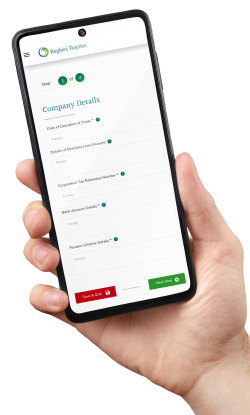
Liquidation Portal For Company Directors
decorative line
Reduce Stress - Lose Creditor Pressure
Clear & Simple Visual Dashboard - Track your Progress
What should you do if your business receives a CCJ?
Pay the debt in full within 30 days If you can pay the debt in full within 30 days of the judgment date there will be no negative effect on your company's credit rating, and the judgment will be removed from the court’s records.
Pay the debt after 30 days Paying the debt in full or in instalments after 30 days means that it will appear on your business’ credit file. Although the debt will be marked as ‘satisfied,’ it will remain on your credit record for six years. This will have a negative effect on your ability to borrow money as a business, as lenders use a company’s credit file to help them decide whether to sanction loans.
Cancel the CCJ If you believe that you don't owe the debt, or know that you've already paid your creditor, you can apply to the court to have the judgment cancelled or ‘set aside.’ This course of action is also possible if you didn't receive the court notification ‐ you may have moved premises, for example, or the creditor may have used an incorrect address. This option involves a court hearing, which you'll have to attend to explain what has happened.
Concerned about National Living Wage and NI increases?
With the rates of both National Living Wage and employer National Insurance Contributions increasing in recent years, this additional cost of employing staff has added more pressure onto already squeezed cash flows. If you are worried about the impact this is having on your company's finances, talk to the experts at UK Liquidators. As licensed insolvency practitioners we can explain your options and help you plot a way forward. Call today on 0808 253 9878.
What if you refuse to pay the CCJ?
Refusing to pay the debt associated with the CCJ can quickly lead to bailiff action, and the seizure of business assets up to the value of the debt (and possibly more to cover the bailiffs’ fees). County Court Judgments are also commonly used as a first step by creditors intent on forcing a business into liquidation. While a CCJ cannot directly lead to your company being forced into closure, it can be used as a platform for further action.
A court-ordered compulsory liquidation process is instigated by a winding up petition. When a creditor has a proven debt that remains unpaid - such as by issuing a CCJ - they may be able to petition for the debtor business to be wound up. If a winding‐up order is granted, your business will close down following the sale of assets and you'll be investigated by the Insolvency Service.
Can I remove a business CCJ?
Once a CCJ is issued it cannot be removed once 30 days have passed. Although repaying the money owed after 30 days will see it marked as 'satisfied' on your company's credit record, it will remain visible on your credit file for six years.
Start your online liquidation today
If you have decided liquidation is the right option for your limited company, you can take the first step and begin the process online using our online portal. Starting the process is quick, simple, and can be done at a time that suits you. Your information will be submitted to your local UK Liquidators insolvency practitioner who will be with you every step of the way. Click here to start your company’s liquidation online.
The effects of a County Court Judgment on your business
The long‐term effects of a CCJ can be very damaging for your business. The fact that the judgment stays on your credit file for six years adversely affects your ability to borrow and obtain credit from suppliers.
Poor business credit ratings, restricted borrowing, and rejected applications for additional supplier credit, are all issues that can leave your organisation operating at severely reduced capacity, seriously limiting business growth.
If you have been issued a CCJ, time is very much of the essence. If your company is unable to clear the debt associated with the CCJ, this should be taken as a huge warning sign that all is not well with the finances of your company. You should make it a priority to seek the services of a licensed insolvency practitioner to better understand the options open to you and your company.
For more information on County Court Judgments and what happens if you refuse to pay, please get in touch with our expert team at UK Liquidators. We offer free, same‐day consultations, and operate a broad network of offices within the UK, so you're never far away from professional insolvency help for your company.
Jonathan Munnery
Insolvency & Restructuring Expert | 20+ Years Insolvency Experience
Jonathan is a Partner at Real Business Rescue and member of both the Insolvency Practitioners Association (MIPA) and The Association of Business Recovery Professionals (MABRP). Jonathan has over 20 years’ experience guiding directors through CVL and MVL processes, helping them understand their options and navigate financial distress with clarity and compassion.
IPA Member MABRP Member IPA Regulated
“ Directors often wait too long before seeking advice. The earlier you call, the more options remain available to you — and the better the outcome for everyone involved. ”
Jonathan is a Partner at Real Business Rescue and member of both the Insolvency Practitioners Association (MIPA) and The Association of Business Recovery Professionals (MABRP). Jonathan has over 20 years’ experience guiding directors through CVL and MVL processes, helping them understand their options and navigate financial distress with clarity and compassion.
This site uses cookies to monitor site performance and provide a more responsive and personalised experience. You must agree to our use of certain cookies. For more information on how we use and manage cookies please read our PRIVACY POLICY