What are the rules for restoring a limited company?
Company liquidation involves professionally valuing and selling a business’ assets, and distributing the proceeds according to the company’s financial status on closure – essentially, whether it’s solvent or insolvent.
Solvent liquidations are carried out under a process called Members’ Voluntary Liquidation, or MVL, and the proceeds of sale are distributed amongst members. With voluntary insolvent liquidations, it means the company can’t repay its debts, so the process differs.
Under Creditors’ Voluntary Liquidation (CVL), the liquidation funds are paid to creditors in the statutory order. Compulsory liquidation is a further form of insolvent liquidation whereby a company is forced into winding up by a creditor.
Although liquidation generally means permanent closure for the majority of businesses, there are instances where a company might have to be reinstated to the register at Companies House after it’s been closed down.
When might a company be reinstated after liquidation?
If a company is restored to the register after liquidation, a new liquidator will be appointed. This might occur if new information comes to light, for example, and director conduct needs to be investigated further after the liquidation process has completed.
It’s incumbent on limited company directors to fulfil certain statutory obligations, and when the company enters insolvency, creditors’ interests must be protected to minimise financial losses.
If creditors aren’t prioritised directors can face allegations of wrongful trading, or other forms of misconduct/misfeasance. So what types of action could lead to the reinstatement of a company in this way, and what are the potential consequences for directors?
Concerned about National Living Wage and NI increases?
With the rates of both National Living Wage and employer National Insurance Contributions increasing in recent years, this additional cost of employing staff has added more pressure onto already squeezed cash flows. If you are worried about the impact this is having on your company's finances, talk to the experts at UK Liquidators. As licensed insolvency practitioners we can explain your options and help you plot a way forward. Call today on 0808 253 9878.
What is director misconduct?
Director misconduct could include a number of different actions, whether carried out deliberately or unwittingly. For example:
Preferential payments
Preferential payments occur when a creditor is repaid in favour of others. In practice, this is commonly a family member or friend of a director – someone who has provided a loan to the business.
Transactions at an undervalue
These types of transactions take place when directors sell or otherwise dispose of business assets at below their true value – often to a friend or family member – with a view to depriving creditors of liquidation funds.
Concealing assets
If it’s discovered following liquidation that directors have concealed assets, the company may be reinstated to allow the liquidator to restore the property/asset to business ownership.
Directors face a range of sanctions under these circumstances, including personal liability for company debts, disqualification for up to 15 years, and even a prison sentences in cases where serious fraud is uncovered.
Stop Creditor Pressure
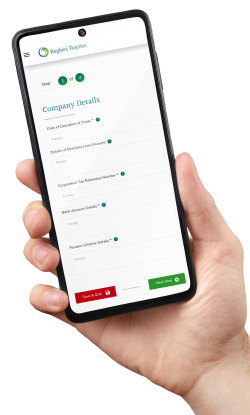
Liquidation Portal For Company Directors
decorative line
Reduce Stress - Lose Creditor Pressure
Clear & Simple Visual Dashboard - Track your Progress
What’s the difference between a liquidated company and a dissolved company?
Company liquidation is an official procedure carried out by licensed insolvency practitioners (IPs). A dissolved company, on the other hand, has been struck off the Register of Companies – a process either instigated voluntarily by directors or enforced by Companies House.
Voluntary dissolution is an inexpensive method to close a company but the business must be solvent. Again, it can be reinstated to the register if creditors make a claim, and directors face scrutiny by the Insolvency Service if this occurs.
In a similar way to restoration following liquidation, the dissolved company is reinstated to the register as if dissolution never took place. This allows claims to be made by creditors as they would have done if the business was still actively trading.
Start your online liquidation today
If you have decided liquidation is the right option for your limited company, you can take the first step and begin the process online using our online portal. Starting the process is quick, simple, and can be done at a time that suits you. Your information will be submitted to your local UK Liquidators insolvency practitioner who will be with you every step of the way. Click here to start your company’s liquidation online.
Seeking professional help
If you’d like more information on company reinstatement after liquidation, or any other aspect of the liquidation process, UK Liquidators will help. We’re independent specialists and can ensure that you follow the correct procedure according to your business’ circumstances.
Please get in touch with our partner-led team to arrange a free, same-day consultation. We operate a network of offices around the country.
Jonathan Munnery
Insolvency & Restructuring Expert | 20+ Years Insolvency Experience
Jonathan is a Partner at UK Liquidators and member of both the Insolvency Practitioners Association (MIPA) and The Association of Business Recovery Professionals (MABRP). Jonathan has over 20 years’ experience guiding directors through CVL and MVL processes, helping them understand their options and navigate financial distress with clarity and compassion.
IPA Member MABRP Member IPA Regulated
“ Directors often wait too long before seeking advice. The earlier you call, the more options remain available to you — and the better the outcome for everyone involved. ”
Jonathan is a Partner at UK Liquidators and member of both the Insolvency Practitioners Association (MIPA) and The Association of Business Recovery Professionals (MABRP). Jonathan has over 20 years’ experience guiding directors through CVL and MVL processes, helping them understand their options and navigate financial distress with clarity and compassion.
This site uses cookies to monitor site performance and provide a more responsive and personalised experience. You must agree to our use of certain cookies. For more information on how we use and manage cookies please read our PRIVACY POLICY