A company is considered insolvent when it cannot meet its financial obligations, either because it cannot afford to pay debts as they fall due or having liabilities exceeding its assets. Insolvency requires an insolvency procedure, such as administration or liquidation, to manage the company's affairs and address its debts.
Is my limited company insolvent?
Insolvency is when a company is unable to pay its outgoings as and when they fall due, or when its debts are higher than its assets.
Not every company which is experiencing financial difficulties is insolvent. Short-term cash flow problems does not necessarily equate to an insolvent company. However, it if your company is facing financial problems, you should make it a priority to understand the scale of the difficulties and whether the company is insolvent.
There are two main tests which can determine whether your company is insolvent.
Balance sheet test - The balance sheet test which looks at the value of your company’s assets and weighs these up against its liabilities. If the debts exceed the value of assets, the company is classed as balance sheet insolvent.
Cash flow test – A company can be cash flow insolvent if it is unable to meet its outgoings (such as bills and debt repayments) in full and on time. If you have fallen into arrears with your creditors and are unable to pay your bills or cover debt repayments with the money coming into your business, it is likely your company is insolvent.
If you believe your company is insolvent, it is vital that you take action at the earliest possible opportunity. This will ensure more options are available to help your company while also protecting the interests of outstanding creditors as far as possible.
Concerned about National Living Wage and NI increases?
With the rates of both National Living Wage and employer National Insurance Contributions increasing in recent years, this additional cost of employing staff has added more pressure onto already squeezed cash flows. If you are worried about the impact this is having on your company's finances, talk to the experts at UK Liquidators. As licensed insolvency practitioners we can explain your options and help you plot a way forward. Call today on 0808 253 9878.
How to protect creditors during insolvency
As the director of a limited company, you have a number of legal duties and responsibilities which must be upheld in your running of the business. Once you know your company to be insolvent, there are a number of additional legal requirements to consider.
One of these is to place the interests of outstanding creditors above those of yourself and your fellow directors and shareholders once you know the company to be insolvent. You should not do anything which may worsen the financial position of creditors or increase the risk of them incurring further losses.
In practice, this means you should not take out any additional borrowing which you know you will be unable to repay, nor should you dispose of company assets without express permission from a licensed insolvency practitioner.
When a company is insolvent, directors must also be aware of the dangers of making preferential payments. A preference payment happens when a company is judged to have favoured one (or a number) of creditor(s) over others. This could be by repaying a loan which is secured by a personal guarantee, or paying creditors which the director has a link to, while other creditors remain unpaid.
As part of the liquidation of an insolvent company, transactions leading up to the company becoming insolvent will be investigated, and if it is judged that a preference has been created while the company is insolvent, directors may face personal liability for some or all of the company’s debt. Creditors who were put in a preferential position may also be asked to return the money to the company so that it can be distributed amongst all creditors fairly.
Stop Creditor Pressure
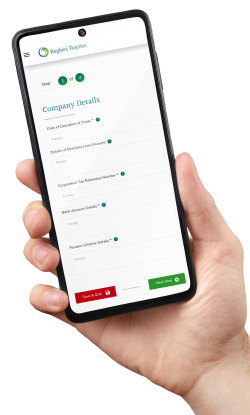
Liquidation Portal For Company Directors
decorative line
Reduce Stress - Lose Creditor Pressure
Clear & Simple Visual Dashboard - Track your Progress
Once you know your company is insolvent, you need to take steps to protect your company and creditors from further losses. This is best achieved by enlisting the help of a licensed insolvency practitioner who will be able to talk you through your current position and recommend the best course of action going forwards.
In many cases, an insolvent company will have to cease trading immediately in order to prevent the situation from escalating and the financial position to worsen. However, there are some instances whereby continuing to trade for a short time may be more beneficial to existing creditors. This is a grey area and expert advice from a licensed insolvency practitioner is the only way of ensuring you are acting in a responsible way when it comes to continuing to trade while insolvent.
By consulting a licensed insolvency practitioner at the early signs of insolvency, you are not only demonstrating your desire to protect your creditors, but you also increasing the chances of rescuing your business going forwards.
Options for an insolvent company
There are a variety of formal and informal options for an insolvent company, depending on the company’s financial position, future viability, and desire to continue trading.
Time to Pay (TTP) – If you have fallen behind in your tax payments to HMRC and you are worried this could push your company to the brink of insolvency, you may be able to negotiate a payment plan to help you pay back your owed taxes in an affordable and sustainable manner. This can be done by way of a Time to Pay (TTP) arrangement. In the majority of cases you will need to be able to clear your arrears within 12 months. You can arrange a TTP with HMRC directly, or alternatively, the experts at UK Liquidators can handle the negotiations on your behalf.
Company Voluntary Arrangement – A Company Voluntary Arrangement (CVA) is a formal payment plan entered into by an indebted company and its outstanding creditors. CVAs typically last between 3-5 years, during which time the company will agree to make a series of monthly repayments which will be distributed amongst creditors. The aim of a CVA is to lessen the monthly financial burden on the struggling company, and allow it to use future profits to pay existing debts. In order for a CVA to be implemented, at least 75% (by value) of creditors must give their consent, and once this has been given, the arrangement becomes legally binding on all parties. CVAs are only suitable for those companies which can demonstrate a strong change of future viability and who can afford to make a significant contribution to their existing debts.
Liquidation – For some insolvent companies, particularly those who are experiencing acute financial distress and have an uncertain future, it may be the case that placing the company into liquidation is the best route for all parties. This can be done through a director-initiated process known as a Creditors’ Voluntary Liquidation (CVL). This is a formal insolvency procedure and can only be administered under the guidance of a licensed insolvency practitioner. All company assets will be sold as part of the liquidation, with the proceeds being used to repay creditors as far as possible. All remaining debt will be written off (unless personally guaranteed) and the company will be dissolved and its name removed from the register held at Companies House.
Start your online liquidation today
If you have decided liquidation is the right option for your limited company, you can take the first step and begin the process online using our online portal. Starting the process is quick, simple, and can be done at a time that suits you. Your information will be submitted to your local UK Liquidators insolvency practitioner who will be with you every step of the way. Click here to start your company’s liquidation online.
How UK Liquidators can help with company insolvency
If your company is insolvent you need to take action now. Ignoring the problems you are currently facing will only make the situation worse, and you could be exposing yourself to personal liability in the process.
At UK Liquidators, we understand seeking advice for company worries is a daunting prospect, and this is why we make it our mission to make the process and stress-free as possible for you. We have a network of regional offices located across the length and breadth of the country meaning you are never far from a local expert ready and waiting to help you and your company decide on your next steps.
You can arrange a free no-obligation consultation with one of our expert advisers, who will be able to give you immediate help and actionable advice when it comes to your insolvent company. Take the first steps by calling our team today on 0808 253 5776.
Jonathan Munnery
Insolvency & Restructuring Expert | 20+ Years Insolvency Experience
Jonathan is a Partner at Real Business Rescue and member of both the Insolvency Practitioners Association (MIPA) and The Association of Business Recovery Professionals (MABRP). Jonathan has over 20 years’ experience guiding directors through CVL and MVL processes, helping them understand their options and navigate financial distress with clarity and compassion.
IPA Member MABRP Member IPA Regulated
“ Directors often wait too long before seeking advice. The earlier you call, the more options remain available to you — and the better the outcome for everyone involved. ”
Jonathan is a Partner at Real Business Rescue and member of both the Insolvency Practitioners Association (MIPA) and The Association of Business Recovery Professionals (MABRP). Jonathan has over 20 years’ experience guiding directors through CVL and MVL processes, helping them understand their options and navigate financial distress with clarity and compassion.
This site uses cookies to monitor site performance and provide a more responsive and personalised experience. You must agree to our use of certain cookies. For more information on how we use and manage cookies please read our PRIVACY POLICY