HMRC can force your company into liquidation if you are persistently behind in your tax affairs; in fact, HMRC are one of the most active users of the winding up petition process in England and Wales. If your company has unpaid tax debts and has not responded to HMRC's attempts to recover them, HMRC can apply to the court for a winding up order that places your company into compulsory liquidation.
The threat of a HMRC issued winding up petition is one of the most serious situations a director can face, and one where acting quickly can make a significant difference. There are steps you can take to stop or delay the process at almost every stage, but the options available to you become fewer as the process advances. This article explains exactly how HMRC can force your company into liquidation, what the process entails, and what you can do at each point.
Concerned about National Living Wage and NI increases?
With the rates of both National Living Wage and employer National Insurance Contributions increasing in recent years, this additional cost of employing staff has added more pressure onto already squeezed cash flows. If you are worried about the impact this is having on your company's finances, talk to the experts at UK Liquidators. As licensed insolvency practitioners we can explain your options and help you plot a way forward. Call today on 0808 253 9878.
HMRC winding up — at a glance
Question
Answer
Can HMRC force my company into liquidation?
Yes, through a winding up petition presented to the court
What triggers HMRC to petition?
Unpaid tax debts that are undisputed and have been ignored or unresolved after enforcement attempts
What is the minimum debt threshold?
£750, although HMRC typically pursues larger debts; the threshold is the legal minimum, not the practical trigger
What happens when the petition is advertised?
Company bank accounts are typically frozen immediately by the bank meaning trading becomes extremely difficult
Can the petition be stopped?
A winding up petition can be stopped by paying the debt in full, agreeing a TTP, entering a CVL, or in some cases applying to court to have it dismissed
What happens if the winding up order is granted?
The Official Receiver is appointed immediately; directors lose all control and the company is compulsorily liquidated
How is compulsory liquidation different from a CVL?
Directors have no control, no choice of insolvency practitioner, and the investigation of director conduct can take into account the fact directors were not proactive about resolving the situation
Stop Creditor Pressure
Liquidation Portal For Company Directors
decorative line
Reduce Stress - Lose Creditor Pressure
Clear & Simple Visual Dashboard - Track your Progress
HMRC follows a defined legal process before reaching the point of presenting a winding up petition. Understanding each stage helps you identify where you are in the process and what your options still are.
Stage 1 — Initial demands and debt collection
Before taking legal action, HMRC will typically have issued multiple payment demands, reminder notices, and letters from its debt management team. They may also have instructed a debt collection agency or made direct contact with the company by telephone. At this stage, engaging with HMRC and exploring a Time to Pay arrangement can still resolve the situation without legal proceedings.
Stage 2 — Statutory demand
If initial debt collection is unsuccessful, HMRC may issue a statutory demand, a formal legal document requiring payment of the debt within 21 days. A statutory demand is a serious escalation. It is the legal precursor to a winding up petition and signals that HMRC is prepared to take court action if the debt is not resolved.
Receiving a statutory demand does not mean a winding up petition has or will be filed, but it means one could follow if you do not act. At this stage, options still include paying the debt in full, agreeing a Time to Pay arrangement with HMRC, or taking professional advice about whether a formal insolvency process such as liquidation is the appropriate route.
Stage 3 — Winding up petition presented to court
If the statutory demand is not resolved, HMRC can present a winding up petition to the court. The petition is filed at the court and served on the company. At this point the clock is ticking and the petition will be advertised in the Gazette within a short window unless action is taken to prevent it.
This is the stage at which urgent professional advice is essential. There is a narrow window between the petition being served and it being advertised and acting within that window gives you the best chance of resolving the situation before the most damaging consequences follow.
Stage 4 — Advertisement in the London Gazette
Once the winding up petition is advertised in the Gazette, the consequences become immediate and severe. The company's bank will almost certainly freeze the company's accounts as soon as they become aware of the advertisement which typically happens within days. With frozen accounts, the company cannot pay staff, suppliers, or creditors, and trading becomes effectively impossible for most businesses. The advertisement is also a public record, visible to customers, suppliers, and credit reference agencies. The reputational damage at this stage can be significant.
Stage 5 — Court hearing
The winding up petition is listed for a court hearing, typically within a few weeks of advertisement. At the hearing, the court will consider whether to grant a winding up order. Creditors, including HMRC, can appear to support the petition. The company can also appear to oppose it or to demonstrate that the debt has been paid or resolved.
If no resolution has been reached and the court is satisfied that the company cannot pay its debts and is in fact insolvent, a winding up order will be granted.
Stage 6 — Winding up order granted
Once a winding up order is granted, the company enters compulsory liquidation. There is nothing else that can be done to save the company at this point. The Official Receiver is appointed immediately as liquidator. Directors lose all authority over the company and must hand over all books, records, and assets. The Official Receiver will investigate director conduct and report their findings to the Insolvency Service.
Start your online liquidation today
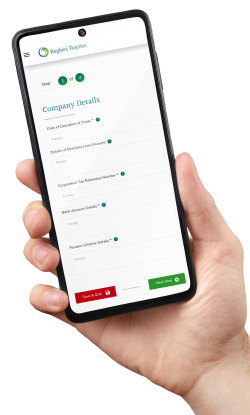
If you have decided liquidation is the right option for your limited company, you can take the first step and begin the process online using our online portal. Starting the process is quick, simple, and can be done at a time that suits you. Your information will be submitted to your local UK Liquidators insolvency practitioner who will be with you every step of the way. Click here to start your company’s liquidation online.
What makes HMRC decide to petition for winding up?
HMRC does not petition immediately every time a company has unpaid tax. In practice, they typically pursue a winding up petition where:
The debt is undisputed and has been outstanding for a significant period despite repeated demands
The company has not engaged with HMRC's attempts to contact them or has ignored formal correspondence
A previous Time to Pay arrangement has been agreed and has defaulted without explanation
The debt is substantial. While the legal minimum for issuing a winding up petition is £750, HMRC typically reserves this type of action for larger debts
HMRC has reason to believe the company is dissipating assets or that further delay will reduce the prospects of recovery
Conversely, HMRC is less likely to petition where the company is actively engaging, making payments, and demonstrating a genuine commitment to resolving the debt. Engagement with HMRC is the single most important factor in preventing escalation to the stage of compulsory liquidation.
Can a winding up petition from HMRC be stopped?
Yes, at most stages of the winding up petition process, the petition can still be resolved with HMRC. The options available depend on how far the process has advanced.
Before the petition is advertised
This is the most important window. If the petition has been served but not yet advertised in the Gazette, the following options may be available:
Pay the debt in full — If the company has the funds or can raise them, paying the full outstanding balance before advertisement will typically result in HMRC agreeing to withdraw the petition.
Agree a Time to Pay arrangement — HMRC may agree to suspend the petition if a credible TTP is agreed. This is not guaranteed and HMRC is not obliged to agree, but proactive engagement at this stage can be effective.
Enter a Creditors' Voluntary Liquidation — Placing the company into voluntary liquidation by way of a CVL before the winding up order is granted allows directors to take control of the winding up process, choose their own insolvency practitioner, and avoid the more adversarial compulsory liquidation route.
Apply to court to have the petition dismissed or adjourned — If the debt is genuinely disputed, or if there are procedural grounds, it may be possible to apply to court for the petition to be dismissed or adjourned. This is a legal route that requires specialist advice.
After the winding up petition is advertised
Once the winding up petition has been advertised, the options narrow but do not disappear entirely. Paying the debt in full remains the most straightforward resolution. Entering a CVL at this stage is still possible but more complex, and the frozen bank accounts create practical difficulties. Court applications to adjourn or dismiss the petition are still possible in limited circumstances.
The key message is that acting before the petition is advertised is always significantly better than acting after. The advertisement is the moment at which the most damaging practical consequences such as frozen accounts, public record, and reputational damage take effect. Everything before that point is more manageable.
Why is a CVL better than waiting for compulsory liquidation?
If your company is insolvent and closure is inevitable, entering a Creditors' Voluntary Liquidation before HMRC's petition for compulsory liquidation is granted is almost always the better outcome for directors. The comparison is stark:
CVL
Compulsory Liquidation
Initiated by
Directors voluntarily
HMRC or creditor via court
Choice of insolvency practitioner
Directors choose their own licensed insolvency practitioner
Official Receiver appointed automatically
Bank accounts
Managed transition with insolvency practitioner
Frozen as soon as petition is advertised
Director conduct
Investigated by the appointed insolvency practitioner
Investigated by the appointed Official Receiver
Director's future
Can start a new company if conduct is clear
Can start a new company if conduct is clear
The moment directors recognise that closure of the company is the most realistic outcome, taking control of that process through a CVL gives them considerably more say over how it unfolds.
How UK Liquidators can help
We deal with HMRC winding up situations urgently and regularly. Whether you have just received a statutory demand, been served with a petition, or are watching the situation escalate and want to understand your options before it gets worse, the right time to speak to us is now.
All insolvency practitioners at UK Liquidators are fully licensed and regulated. We offer a free initial consultation with no obligation, operating from 100+ UK offices , and treat every conversation as strictly confidential.
Frequently asked questions
How much does my company need to owe before HMRC will petition for winding up?
The legal minimum debt threshold for a winding up petition is £750, but in practice, HMRC typically reserves this action for significantly larger tax debts where other enforcement routes have been exhausted. The amount owed is only one factor — HMRC's decision to petition is also influenced by the length of time the debt has been outstanding, the company's engagement (or lack of it), and whether further delay is likely to reduce recovery prospects.
Will HMRC give me warning before presenting a winding up petition?
HMRC will typically have issued multiple demands and enforcement notices before reaching the petition stage. However, there is no legal requirement for HMRC to give advance notice that a petition is about to be filed; the first formal indication may be the petition itself being served on the company. This is why maintaining open communication with HMRC throughout the debt collection process is so important. If you are engaging and making progress, HMRC is far less likely to escalate to a petition without further notice.
Can I dispute HMRC's debt to stop the winding up petition?
If the debt on which the petition is based is genuinely disputed, for example, if there is a legitimate dispute about the amount of tax owed, you may be able to apply to court to have the petition dismissed or adjourned on the grounds that the debt is not undisputed. Courts are generally reluctant to grant winding up orders where there is a genuine dispute about the underlying debt. However, this is a legal process that requires specialist advice, and it will not succeed if the dispute is not substantive. Disputing the debt as a delaying tactic, without genuine grounds, is unlikely to be effective.
What happens to my employees if HMRC forces my company into liquidation?
Employees are made redundant when a company enters compulsory liquidation. They are entitled to claim redundancy pay, notice pay, and arrears of wages from the government's National Insurance Fund. The Official Receiver will notify employees and provide information about how to make their claims. Employee wages and holiday pay rank as preferential creditors in the distribution of assets, ahead of unsecured creditors including HMRC for most tax debts.
Can HMRC petition for winding up even if I am trying to sell the business?
Yes, HMRC is not obliged to hold off on enforcement action because you are in the process of selling the business. If a sale is genuinely in progress and is likely to generate sufficient funds to repay the HMRC debt, this may be a factor in negotiating with HMRC to delay or withdraw the petition but there are no guarantees. If you are in this situation, taking professional advice urgently is essential. A licensed insolvency practitioner can help you manage the interaction between the sale process and HMRC's enforcement action.
Jonathan Munnery
Insolvency & Restructuring Expert | 20+ Years Insolvency Experience
Jonathan is a Partner at UK Liquidators and member of both the Insolvency Practitioners Association (MIPA) and The Association of Business Recovery Professionals (MABRP). Jonathan has over 20 years’ experience guiding directors through CVL and MVL processes, helping them understand their options and navigate financial distress with clarity and compassion.
IPA Member MABRP Member IPA Regulated
“ Directors often wait too long before seeking advice. The earlier you call, the more options remain available to you — and the better the outcome for everyone involved. ”
Jonathan is a Partner at UK Liquidators and member of both the Insolvency Practitioners Association (MIPA) and The Association of Business Recovery Professionals (MABRP). Jonathan has over 20 years’ experience guiding directors through CVL and MVL processes, helping them understand their options and navigate financial distress with clarity and compassion.
This site uses cookies to monitor site performance and provide a more responsive and personalised experience. You must agree to our use of certain cookies. For more information on how we use and manage cookies please read our PRIVACY POLICY