What to do if I cannot pay my company's corporation tax bill?
Corporation tax is paid annually by limited companies registered in the UK that are making a profit. The extent of your company’s liability for corporation tax depends on how much profit it makes.
So what happens if you cannot pay your company's corporation tax bill? What action can HMRC take against your company?
What happens if I cannot pay my corporation tax bill?
Initially, HMRC will contact you with a reminder/warning letter that your corporation tax payment is overdue. If you don’t respond, they may send a bailiff or HMRC enforcement officer to your business premises to identify goods for seizure.
HMRC has a range of strong enforcement measures at their disposal, and are known to act quickly and decisively in collecting tax arrears – particularly if they believe the debtor business may be at risk of becoming insolvent.
For tax debts of £750 or more they can petition to wind up the company and force it into compulsory liquidation. This sets in motion an investigation by the Official Receiver into how the directors have handled the company’s affairs, and whether their actions in the period leading up to the company becoming insolvent contributed to its demise.
When considering your options if you can’t afford your corporation tax bill, a key piece of advice is to contact HMRC as soon as possible. Entering into negotiations with HMRC conveys a proactive approach to repaying the arrears, and demonstrates that you’re not avoiding payment deliberately.
“Corporation tax arrears are one of the most common HMRC debts we deal with. While corporation tax debt is common, this doesn't mean that it's not serious. In our experience HMRC are quick to take action against companies carrying corporation tax debt, particularly those who are refusing to engage with them. The important thing to note is that this is a solvable problem in the vast majority of cases, provided you act before HMRC starts enforcement.” — Jonathan Munnery, Partner, UK Liquidators
How long can HMRC go back for unpaid corporation tax?
While most consumer debts become statute barred after seven years, this does not apply to money owed to HMRC, which includes corporation tax. HMRC has the power to pursue debts indefinitely.
If you do owe money to HMRC, therefore, it is vital that you take action to resolve the problem rather than hoping it will go away on its own. Knowing HMRC can continue to chase you for unpaid corporation tax for an unlimited length of time is an unwelcome burden to carry through the rest of your working life.
By speaking to one of UK Liquidator's licensed insolvency practitioners, we can remove this worry by ensuring the right steps are taken to resolve your outstanding HMRC corporation tax arrears, even if your company does not have the ability to repay them.
Stop Creditor Pressure
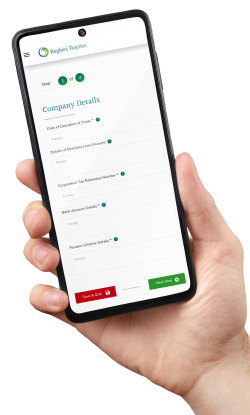
Liquidation Portal For Company Directors
decorative line
Reduce Stress - Lose Creditor Pressure
Clear & Simple Visual Dashboard - Track your Progress
What options do I have if I cannot afford my company's corporation tax bill?
Paying HMRC corporation tax in instalments using a Time to Pay Arrangement
When your company is struggling financially and cannot afford to pay its corporation tax bill in full, HMRC may be willing to offer you more time to pay. Their Time to Pay (TTP) scheme allows eligible businesses extra time to repay tax arrears by spreading the cost into a series of more affordable monthly instalments, usually over a period of three to six months.
It’s important to understand how HMRC operates this scheme, however, and the way in which they view applicants. Obtaining professional insolvency advice before presenting your case for a Time to Pay scheme to HMRC can be hugely beneficial.
In brief, you need to consider how to convince HMRC of your company’s ability to pay corporation tax arrears over the additional months, as you’ll still have to keep up with all other current tax obligations during this time.
The evidence you present might include:
Cost cutting measures
Securing alternative finance to improve cash flow
Selling non-essential assets
Restructuring in some way – your workforce, for example, or renegotiating other debts to free up cash
HMRC will also expect to see detailed cash flow and sales forecasts for the coming months – essentially, a clear business plan demonstrating how you’ll repay your tax debt.
Using formal restructuring for corporation tax debt
If HMRC don’t grant extra time to pay, a formal insolvency procedure such as company administration or a Company Voluntary Arrangement (CVA) may help the business survive this period of financial distress.
Company Voluntary Arrangements are appropriate for businesses that are viable for the long-term, and involve formally renegotiating multiple debts, including tax debts owed to HMRC. CVAs typically run for between 3-5 years and act as a formal and legally-binding repayment plan between an insolvent company and its creditors.
Company administration, on the other hand, can allow a company to restructure its finances and operations to improve efficiency, boost cash flow, and get the business back on a solid financial footing. When a company enters into administration it is granted a moratorium which staves off any impending on ongoing legal action against the company; this moratorium provides the time and space a company needs to consider its options free from the threat of legal action.
Voluntary liquidation for corporation tax arrears
Creditors’ Voluntary Liquidation (CVL) is a director-initiated process which brings about the end of an insolvent company which is beyond the point of rescue. CVL involves liquidating the company’s assets and paying its debts as far as possible from the proceeds; the company will then be wound down and it will cease to exist as a legal entity.
Liquidation results in the ultimate closure of the company, but if no other options exist, it’s preferable to enter into liquidation voluntarily rather than waiting for HMRC to close you down against your will via compulsory liquidation.
Clearly, nobody wants to close their company in this way, but when there really is no other option, CVL provides the optimal route away from an extremely stressful situation.
Case study: a corporation tax bill the company couldn't pay
A professional services company approached us after a strong year was followed by a sharp drop in work, leaving it unable to pay a corporation tax bill of around £45,000. The director had been putting off opening HMRC's letters, worried that making contact would only trigger enforcement. We reviewed the company's cash flow and forecasts and helped prepare a realistic proposal for a Time to Pay arrangement, spreading the arrears over monthly instalments. With the figures set out clearly and the wider business still viable, HMRC agreed. The company kept trading, cleared the arrears on schedule, and the pressure the director had been carrying eased almost as soon as the plan was in place.
Start your online liquidation today
If you have decided liquidation is the right option for your limited company, you can take the first step and begin the process online using our online portal. Starting the process is quick, simple, and can be done at a time that suits you. Your information will be submitted to your local UK Liquidators insolvency practitioner who will be with you every step of the way. Click here to start your company’s liquidation online.
Key takeaways on corporation tax debt
Corporation tax is due nine months and one day after the end of your accounting period and HMRC begins charging interest from the first day it’s late
A Time to Pay arrangement can spread your arrears over monthly instalments, but HMRC must agree to your repayment proposal
Corporation tax is an unsecured debt which belongs to your company, not you personally as its director
HMRC can petition to wind up your company for tax debts of £750 or more and they are by far the most active petitioning creditor in England and Wales
Corporation tax arrears are one of the most common HMRC debts we help directors manage
How UK Liquidators can help when you cannot pay your corporation tax bill
Professional advice is vital if you can’t pay your HMRC liabilities, and speed is of the essence given HMRC's powers of debt enforcement. UK Liquidators can provide the reliable guidance you need in this situation.
Please contact UK Liquidators for a free, same-day consultation - we operate from an extensive network of offices throughout the country, and will quickly provide the assistance you need.
Jonathan Munnery
Insolvency & Restructuring Expert | 20+ Years Insolvency Experience
Jonathan is a Partner at UK Liquidators and member of both the Insolvency Practitioners Association (MIPA) and The Association of Business Recovery Professionals (MABRP). Jonathan has over 20 years’ experience guiding directors through CVL and MVL processes, helping them understand their options and navigate financial distress with clarity and compassion.
IPA Member MABRP Member IPA Regulated
“ Directors often wait too long before seeking advice. The earlier you call, the more options remain available to you — and the better the outcome for everyone involved. ”
Jonathan is a Partner at UK Liquidators and member of both the Insolvency Practitioners Association (MIPA) and The Association of Business Recovery Professionals (MABRP). Jonathan has over 20 years’ experience guiding directors through CVL and MVL processes, helping them understand their options and navigate financial distress with clarity and compassion.
This site uses cookies to monitor site performance and provide a more responsive and personalised experience. You must agree to our use of certain cookies. For more information on how we use and manage cookies please read our PRIVACY POLICY