If you want to close your limited company but owe money to HMRC, you need to proceed very carefully. If you don’t follow the strict regulations surrounding company closure in the UK, particularly when the business is insolvent, it could lead to personal liability for yourself and other directors.
HMRC have strong debt enforcement powers and generally take action quickly against businesses which fail to pay the tax they owe and refuse to engage in communication to resolve the situation. While it is possible to close a company with outstanding HMRC tax liabilities, you do need to seek professional guidance from a licensed insolvency practitioner to sort the situation out.
Our licensed insolvency practitioners at UK Liquidators have extensive experience of helping businesses close down, including those with HMRC debts, and can provide the confidential, reliable guidance you need.
Closing a limited company with HMRC tax debts
When your business owes money that it can’t repay to HMRC by the way of corporation tax debt, VAT debt, or PAYE debt, it has become what is known as cash flow insolvent. Once this point has been reached, you are legally obliged to prioritise the interests of your creditors ahead of those of your fellow directors and shareholders.
You should make it a priority to seek professional advice in order to ensure you are prioritising creditor interests and adhering to your legal responsibilities as the director of an insolvent company. It may be the case that you need to cease trading immediately in order to comply with these duties; an insolvency practitioner will be able to advise you whether this is the case.
“HMRC debt is the single most common reason directors contact us about closing their company. In many cases, the debt has been building for several quarters and spans several tax types including VAT, PAYE, or corporation tax that the company simply couldn’t keep on top of. Closing the company through a formal insolvency process deals with the HMRC debt properly and gives the director a clean break, however, you must take specialist insolvency advice before proceeding..” — Jonathan Munnery, Partner, UK Liquidators
Stop Creditor Pressure
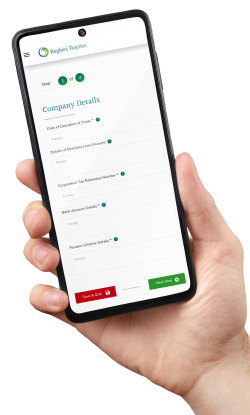
Liquidation Portal For Company Directors
decorative line
Reduce Stress - Lose Creditor Pressure
Clear & Simple Visual Dashboard - Track your Progress
When you enter Creditors’ Voluntary Liquidation any debts which remain unpaid after all company assets have been used to cover the outstanding amount, are written off. This means any HMRC will write off tax debts which cannot be fully repaid by using the value of company assets when the liquidation process reaches its conclusion.
Concerned about National Living Wage and NI increases?
With the rates of both National Living Wage and employer National Insurance Contributions increasing in recent years, this additional cost of employing staff has added more pressure onto already squeezed cash flows. If you are worried about the impact this is having on your company's finances, talk to the experts at UK Liquidators. As licensed insolvency practitioners we can explain your options and help you plot a way forward. Call today on 0808 253 9878.
HMRC debts and compulsory liquidation
HMRC are commonly amongst one of the largest creditors when a business experiences financial distress, and the tax body are known to take action quickly to recover their money. For this reason, it’s important not to delay, as they could rapidly force you into compulsory liquidation.
Compulsory liquidation is not the same as voluntarily entering into liquidation proceedings via a director-initiated CVL.
Compulsory liquidation is a court-ordered process which sees a company forcibly liquidated when its directors fail to take action and address the situation once it becomes knowingly insolvent. Unlike voluntary liquidation, which demonstrates the directors desire to adhere to their legal duties as the director of an insolvent company, compulsory liquidation levied upon a company which has failed to deal with their problems.
Directors should be aware that as part of all insolvent liquidation procedures - whether voluntary or compulsory - the appointed insolvency practitioner will conduct an investigation into the conduct of the directors during the time leading up to the company becoming insolvent. Any action which could have worsened the position of creditors when the company was knowingly insolvent, could be investigated further.
HMRC debts and company dissolution
The voluntary strike off route via a DS01 form isn’t appropriate for companies with either HMRC or other creditor debt.
If you try to strike off your company at Companies House in this way, you should expect HMRC to make a formal objection as an outstanding creditor of the business. An objection like this will see your strike off application suspended and the company will continue to remain active on the Companies House register.
Start your online liquidation today
If you have decided liquidation is the right option for your limited company, you can take the first step and begin the process online using our online portal. Starting the process is quick, simple, and can be done at a time that suits you. Your information will be submitted to your local UK Liquidators insolvency practitioner who will be with you every step of the way. Click here to start your company’s liquidation online.
Benefits of closure via a CVL when you have HMRC debts
Here are just a few of the benefits of entering Creditors’ Voluntary Liquidation when your company owes tax arrears which it is unable to pay:
You reduce the chance of serious allegations being made against you – director misconduct, for example, as you are taking action to resolve the situation rather than letting the company be forcibly closed via a court-ordered compulsory liquidation
The process is carried out by a licensed insolvency practitioner so you know the company is being closed down correctly and any HMRC debts will be dealt with appropriately
Case study: closing a company with mixed HMRC arrears
A hospitality business came to us owing HMRC on several fronts including VAT, PAYE and corporation tax that had built up over a number of difficult quarters with no realistic way to repay. The director had considered simply applying to strike the company off, not realising HMRC would object and could have the company restored. We confirmed the company was insolvent and closed it through a Creditors' Voluntary Liquidation (CVL). The different HMRC debts were dealt with in the correct order of priority as part of the process, and the balance that couldn't be met from the company's assets was written off on completion. The director was able to draw a clear line under the business and move forward.
Key takeaways on company closure with HMRC tax debts
If your company has HMRC tax debts it cannot pay, you should ensure you keep open channels of communication with HMRC rather than ignoring the problem
You may be able to enter into a Time to Pay arrangement to repay your HMRC tax debts over a longer period of time
You can liquidate a company with outstanding HMRC debts. This is done via a Creditors' Voluntary Liquidation (CVL)
Dissolving a company (strike off) with outstanding HMRC debts is not recommended as HMRC routinely objects to strike off applications where tax is owed
HMRC is the most common creditor in the insolvency cases we handle
For more guidance on closing a company with HMRC debts, insolvency, or liquidation in general, please contact our expert team of insolvency practitioners. UK Liquidators offers free same-day consultations, and works from an extensive network of offices around the UK.
Jonathan Munnery
Insolvency & Restructuring Expert | 20+ Years Insolvency Experience
Jonathan is a Partner at UK Liquidators and member of both the Insolvency Practitioners Association (MIPA) and The Association of Business Recovery Professionals (MABRP). Jonathan has over 20 years’ experience guiding directors through CVL and MVL processes, helping them understand their options and navigate financial distress with clarity and compassion.
IPA Member MABRP Member IPA Regulated
“ Directors often wait too long before seeking advice. The earlier you call, the more options remain available to you — and the better the outcome for everyone involved. ”
Jonathan is a Partner at UK Liquidators and member of both the Insolvency Practitioners Association (MIPA) and The Association of Business Recovery Professionals (MABRP). Jonathan has over 20 years’ experience guiding directors through CVL and MVL processes, helping them understand their options and navigate financial distress with clarity and compassion.
This site uses cookies to monitor site performance and provide a more responsive and personalised experience. You must agree to our use of certain cookies. For more information on how we use and manage cookies please read our PRIVACY POLICY