Wanting to close your company and move on is far more common than many directors realise. Whether your company is struggling under the weight of unmanageable debts, you have simply lost the desire to carry on, or you are ready to retire and want to draw a line under things, the reasons behind wanting to walk away are numerous.
The good news is that there are clear, legitimate routes to closing a limited company, and the right one for you depends primarily on your company's financial position. This article explains the main options available, helps you identify which one fits your situation, and sets out what each route involves so you can move forward with confidence.
Concerned about National Living Wage and NI increases?
With the rates of both National Living Wage and employer National Insurance Contributions increasing in recent years, this additional cost of employing staff has added more pressure onto already squeezed cash flows. If you are worried about the impact this is having on your company's finances, talk to the experts at UK Liquidators. As licensed insolvency practitioners we can explain your options and help you plot a way forward. Call today on 0808 253 9878.
Which company closure route is right for my situation?
The first question to answer is whether your company is solvent or insolvent. This single distinction determines which closure routes are available to you.
Your situation
Best route
What it involves
Typical cost
Company is insolvent and cannot pay its debts
Creditors' Voluntary Liquidation (CVL)
Formal closure managed by a licensed insolvency practitioner; debts written off on dissolution
Fees typically met from company assets
Company is solvent with significant retained profits or assets
Members' Voluntary Liquidation (MVL)
Tax-efficient closure; profits distributed to shareholders via insolvency practitioner
Fees met from company assets
Company is solvent with no significant assets or liabilities
Voluntary strike off (dissolution)
Simple administrative process involving applying to Companies House
£13 Companies House fee, no insolvency practitioner needed
Company has debts but you want to attempt rescue first
Seek professional advice before deciding
Options including Time to Pay, CVA, or company administration
Varies by route chosen
Closing an insolvent company via a Creditors' Voluntary Liquidation
If your company cannot pay its debts as and when they fall due, whether that is HMRC, suppliers, bounce back loans, or other creditors, a Creditors' Voluntary Liquidation (CVL) is the most appropriate and legally responsible way to close it. A CVL is a director-initiated process, meaning you make the decision to close the company and appoint a licensed insolvency practitioner of your choice to manage the process.
The CVL process involves the appointed insolvency practitioner taking control of the company's affairs, realising any available assets, distributing funds to creditors in the correct order of priority, and ultimately dissolving the company. The company's remaining debts are written off when the company is dissolved; they do not follow you personally, provided you have not given personal guarantees and have acted responsibly throughout.
Many directors worry that a CVL will be a long, public, or damaging process. In most cases it is none of those things. For a straightforward limited company with manageable debts and a co-operative director, the process typically completes within three to six months and has no impact on your personal credit rating or future ability to work.
Stop Creditor Pressure
Liquidation Portal For Company Directors
decorative line
Reduce Stress - Lose Creditor Pressure
Clear & Simple Visual Dashboard - Track your Progress
Closing a profitable company tax-efficiently via a Members' Voluntary Liquidation
If your company is solvent, meaning it can pay all of its debts in full, and you are looking to close it and extract the remaining profits or assets, a Members' Voluntary Liquidation (MVL) is likely to be the most tax-efficient route available.
In an MVL, a licensed insolvency practitioner is appointed to wind up the company, settle any remaining liabilities, and distribute the surplus assets to shareholders. The key advantage over simply paying yourself dividends and closing the company informally is the tax treatment: distributions through an MVL are treated as capital rather than income, meaning they qualify for Business Asset Disposal Relief which attracts a reduced rate of Capital Gains Tax.
An MVL is typically worth considering where the company has retained profits or assets of £25,000 or more. Below that threshold, the tax saving may not outweigh the professional fees involved, and other options such as voluntary strike off may be more appropriate.
Closing a dormant or debt-free company via a voluntary strike off
If your company has no significant debts, no ongoing trading, and no assets worth distributing, the simplest closure route is a voluntary strike off, also known as dissolution. This is an administrative process rather than a formal insolvency procedure and does not require a licensed insolvency practitioner.
To strike off a company, you submit a DS01 form to Companies House and pay a fee of £13. Companies House will advertise the proposed dissolution in the Gazette, giving creditors and interested parties an opportunity to object. If no objections are received, the company is dissolved two months later.
It is important to be clear about when strike off is and is not appropriate. You cannot use strike off to close a company that has outstanding debts. Attempting to dissolve a company with known creditors is not permitted and can result in the strike off application being objected to and reversed, as well as potential personal consequences for the director. If your company has outstanding debts, take professional advice before attempting to strike it off.
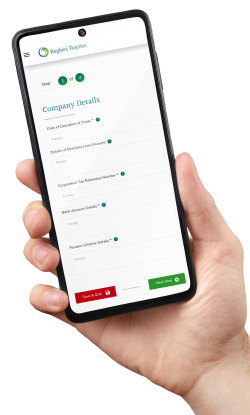
Start your online liquidation today
If you have decided liquidation is the right option for your limited company, you can take the first step and begin the process online using our online portal. Starting the process is quick, simple, and can be done at a time that suits you. Your information will be submitted to your local UK Liquidators insolvency practitioner who will be with you every step of the way. Click here to start your company’s liquidation online.
Can I just stop trading and leave the company dormant?
Technically yes, you can stop trading and leave a company dormant without formally closing it. However, this is rarely the best solution, and for insolvent companies it can create serious problems.
A dormant company still has legal obligations: annual confirmation statements and accounts must be filed with Companies House, and any HMRC obligations continue. Ignoring these leads to penalties and ultimately can result in Companies House striking the company off. More importantly, if the company is insolvent and you simply stop trading and walk away without initiating a formal process, creditors can still pursue the company, and in some circumstances you personally, for the debts.
A director who abandons an insolvent company without taking proper steps to address its liabilities is in a much more difficult position than one who initiates a CVL promptly and cooperates with the process.
If the company is genuinely dormant with no assets and no liabilities, leaving it dormant temporarily is low risk but formally dissolving it is almost always the cleaner outcome in the long run.
What happens to me personally once the company is closed?
For most directors who close a company through the appropriate route, the personal consequences are minimal. Once the company is dissolved:
The company's debts are written off - They do not transfer to you personally, provided you have not given personal guarantees and have not engaged in conduct that creates personal liability
Your personal credit rating is not affected - The company is a separate legal entity, and its closure does not appear on your personal credit file
You are free to work, start a new company, or act as a director of another business immediately - There is no restriction unless you have been disqualified, which affects only a small minority of directors
Personal guarantees crystalise – Any personal guarantees you gave for company debts remain your personal obligation. These are not discharged by the company's closure and will need to be addressed separately
The vast majority of directors who close their companies through a CVL or voluntary strike off move on without any lasting personal consequences. Many go on to start new businesses or take on director roles elsewhere. The process may feel daunting from the outside, but for most directors, the overwhelming feeling on the other side is relief.
How UK Liquidators can help
At UK Liquidators, we help directors close their companies every day, whether through a CVL for insolvent companies, an MVL for solvent ones, or simply by helping them understand which closure route is right for their situation. If you want to close your business and move on, the first step is a free conversation with one of our licensed practitioners.
All insolvency practitioners at UK Liquidators are fully licensed and regulated. We offer a free initial consultation with no obligation, operate from over 100 offices across the UK, and treat every conversation as strictly confidential.
Frequently asked questions
How quickly can I close my company?
It depends on the route. A voluntary strike off for a company with no debts or assets typically takes around two to three months from submitting the DS01 form to dissolution. A CVL for a straightforward insolvent company typically completes within three to six months, though the director's active involvement is concentrated only in the first few weeks. An MVL is similar in timeline to a CVL. In all cases, the process moves faster when the director cooperates promptly with the relevant requirements such as providing documents, responding to queries, and handing over records and assets.
What if I have personally guaranteed some of the company's debts?
Personal guarantees are separate from the company's debts. Personal guarantees are obligations you gave personally, and they are not discharged when the company closes. If the company cannot repay a debt covered by a personal guarantee, the lender can pursue you personally for that amount. This is an important factor to understand before closing the company, as it can have a huge impact on your personal financial position. If you have significant personal guarantees outstanding, taking advice on how to manage them as part of the closure process is strongly recommended.
Can I close my company if it owes money to HMRC?
Yes, but not through voluntary strike off. A company with outstanding HMRC liabilities must be closed through a formal insolvency process such as a CVL. HMRC is a significant creditor in many liquidations and will receive a distribution from available assets. Any HMRC debt not repaid from the company's assets is written off on dissolution. HMRC cannot pursue you personally for these debts after the company's closure unless specific conduct issues, such as deliberate non-payment, give rise to a Personal Liability Notice.
Do I need a solicitor to close my company?
Not usually. For a voluntary strike off, the process is straightforward enough that most directors handle it themselves or with their accountant's help. For a CVL or MVL, a licensed insolvency practitioner manages the entire process; you will not need a solicitor in addition unless there are specific legal complications such as property disputes, litigation, or complex asset realisations. Your insolvency practitioner will advise you if specialist legal input is needed for any aspect of your particular case.
What happens to my employees when the company closes?
If your company has employees, they will be made redundant upon the company’s closure. In a CVL, employees can claim redundancy pay, notice pay, and arrears of wages from the government's National Insurance Fund if the company cannot pay them. These payments are handled by the liquidator as part of the process. If you are closing a company through voluntary strike off, you will need to make employees redundant formally before applying to dissolve the company and ensure all final wage and redundancy obligations are settled.
Jonathan Munnery
Insolvency & Restructuring Expert | 20+ Years Insolvency Experience
Jonathan is a Partner at UK Liquidators and member of both the Insolvency Practitioners Association (MIPA) and The Association of Business Recovery Professionals (MABRP). Jonathan has over 20 years’ experience guiding directors through CVL and MVL processes, helping them understand their options and navigate financial distress with clarity and compassion.
IPA Member MABRP Member IPA Regulated
“ Directors often wait too long before seeking advice. The earlier you call, the more options remain available to you — and the better the outcome for everyone involved. ”
Jonathan is a Partner at UK Liquidators and member of both the Insolvency Practitioners Association (MIPA) and The Association of Business Recovery Professionals (MABRP). Jonathan has over 20 years’ experience guiding directors through CVL and MVL processes, helping them understand their options and navigate financial distress with clarity and compassion.
This site uses cookies to monitor site performance and provide a more responsive and personalised experience. You must agree to our use of certain cookies. For more information on how we use and manage cookies please read our PRIVACY POLICY